The 2026 Framework for High-Efficiency AI Outbound Sales Systems

TL;DR – What an AI Outbound Sales System Actually Includes
Clear ICP, use cases, and success metrics before automation begins
Market-wide account mapping instead of recycled lead databases
Verified contact data combined with timing-based sales triggers
Multichannel outreach supported by deliverability infrastructure
CRM visibility that turns outbound into a feedback loop
In 2026, most B2B teams experimenting with AI in outbound face the same issue.
They automate outreach before defining who they should speak to, why those companies would care, or how success should be measured.
This creates activity, but rarely creates pipeline.
AI can generate messages and schedule sequences, but it cannot compensate for:
unclear targeting
outdated contact data
poor timing
lack of context
Outbound performance is not limited by message volume.
It is limited by strategic clarity.
Below is the framework we use when building AI-driven outbound systems for B2B companies across EU manufacturing, SaaS, and services.
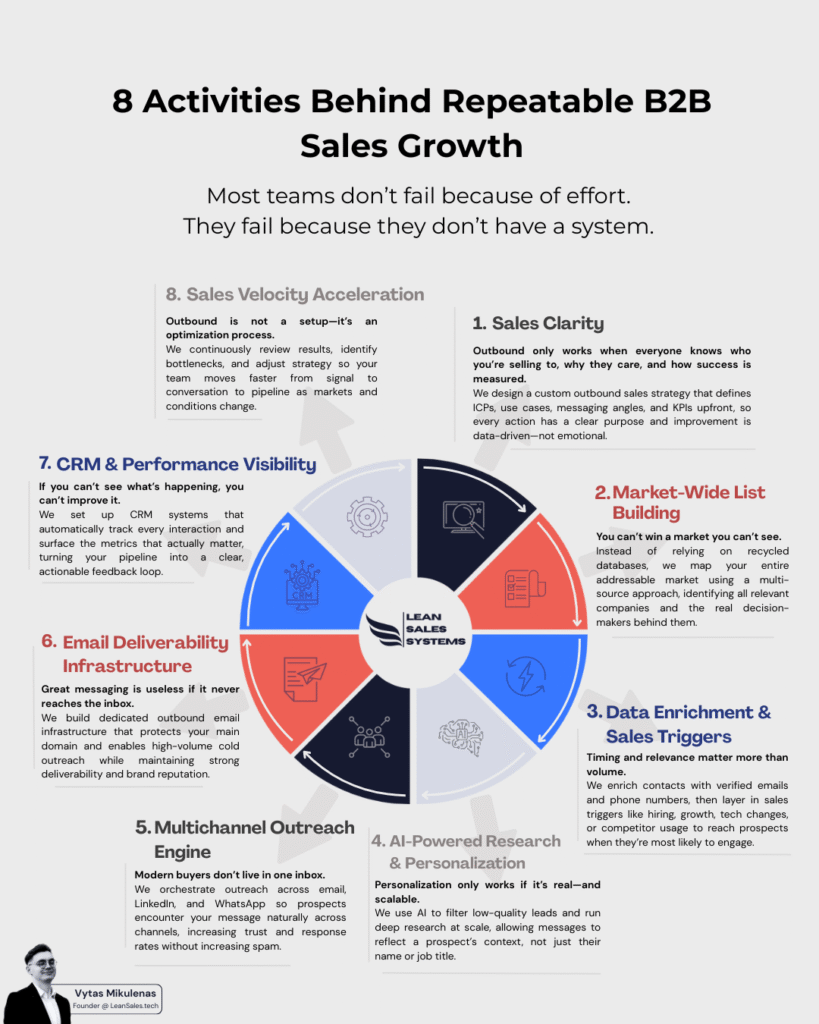
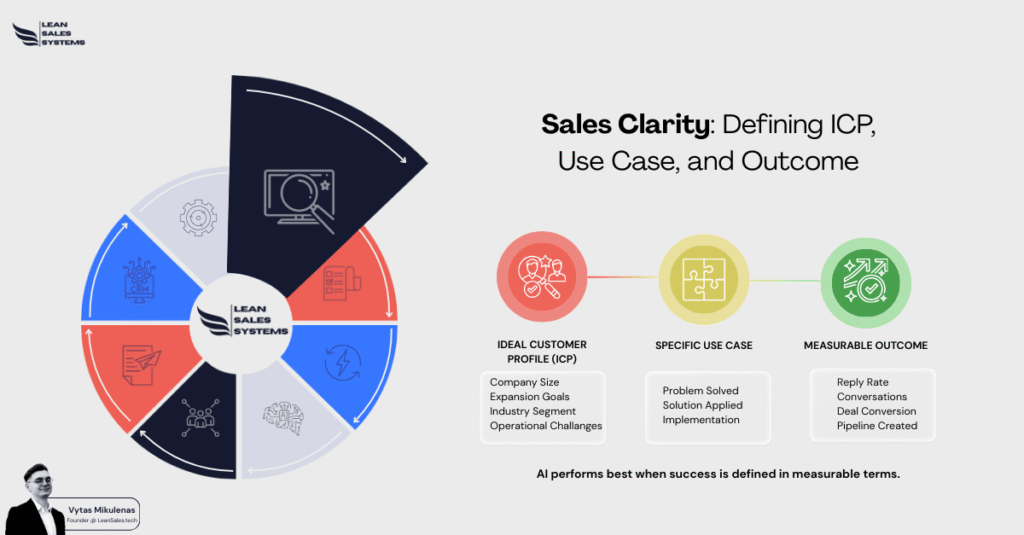
Sales Clarity: Defining ICP, Use Case, and Outcome
What is sales clarity in outbound?
Sales clarity means that every outbound action is tied to:
a defined Ideal Customer Profile (ICP)
a specific use case
a measurable outcome
In practice, this includes:
industry segment
company size
operational challenges
expansion goals
market conditions
For example:
A logistics SaaS provider targeting companies opening new warehouses in Central Europe requires
a completely different outbound structure than a company selling compliance software to established operations teams.
Outbound becomes difficult to evaluate when success is defined emotionally:
“We feel messaging is off”
“Leads don’t seem interested”
Instead of numerically:
reply rate
interested conversations
pipeline created
deal conversion
AI performs best when success is defined in measurable terms.
Market-Wide List Building: Seeing the Full Addressable Market
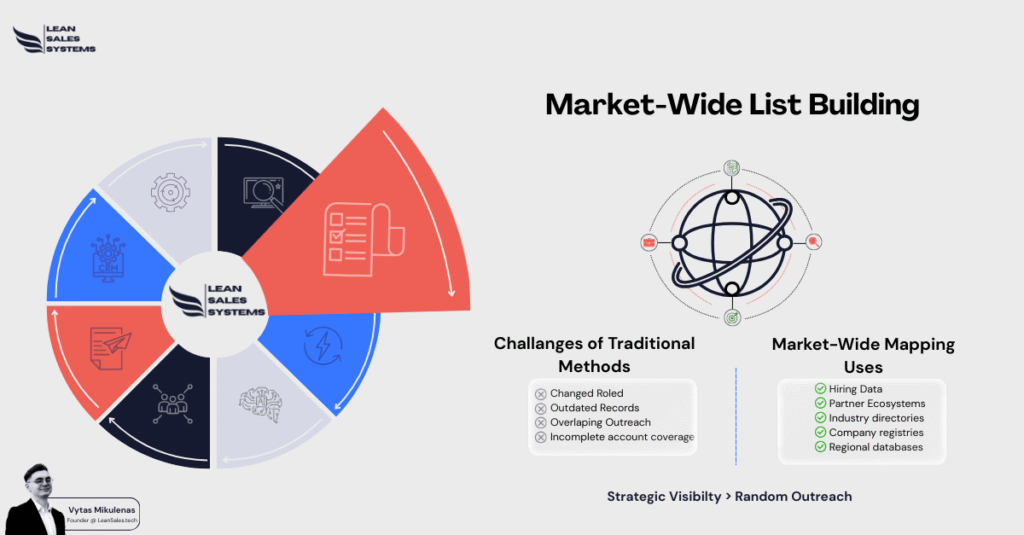
Why does list building matter in B2B?
Many outbound campaigns rely on the same global databases.
This leads to:
overlapping outreach
outdated company records
decision-makers who changed roles
incomplete account coverage
Market-wide mapping uses:
company registries
industry directories
hiring data
partner ecosystems
regional databases
to identify the full Total Addressable Market (TAM).
This is particularly important for:
niche manufacturing segments
export-driven B2B services
region-specific SaaS categories
Without visibility across the market, outbound becomes random rather than strategic.
Data Enrichment & Sales Triggers: Contacting Accounts at the Right Time
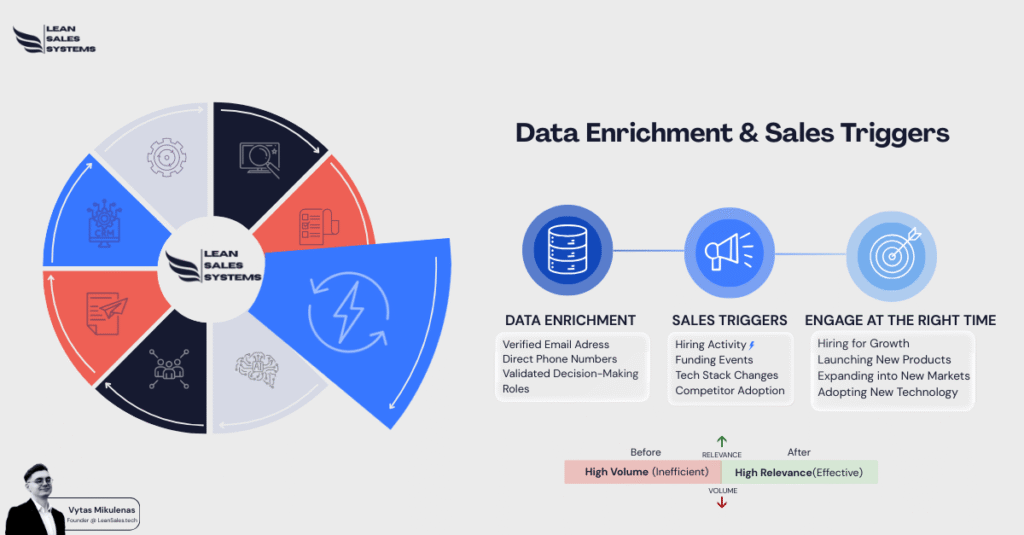
How does timing affect outbound performance?
Companies are more likely to engage when they are:
hiring for growth roles
launching new products
expanding into new markets
adopting new technology
experiencing operational strain
By enriching contacts with:
verified email addresses
direct phone numbers
validated decision-making roles
and layering in signals such as:
hiring activity
funding events
tech stack changes
competitor adoption
Outreach aligns with real change events.
AI-Powered Research & Personalization
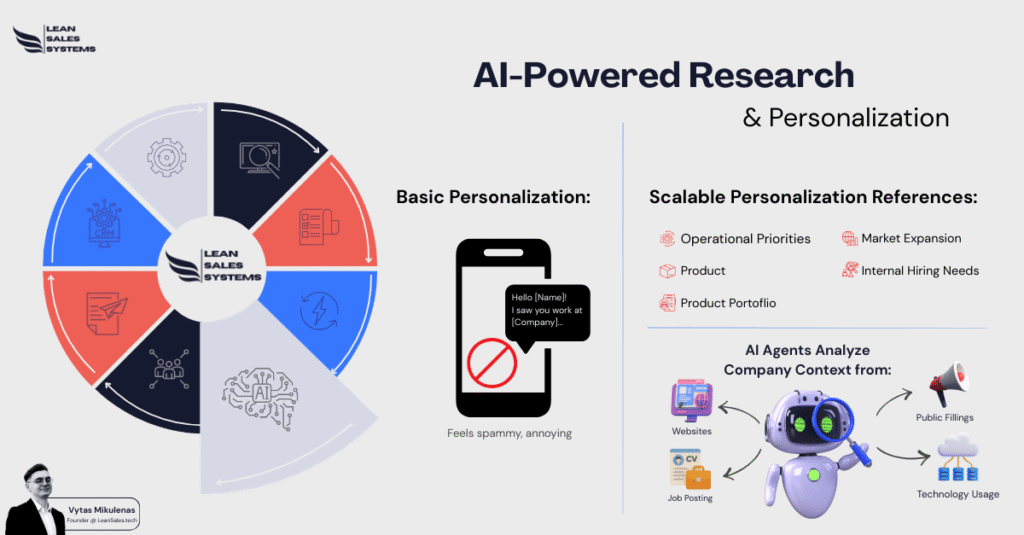
What is scalable personalization in outbound?
Scalable personalization moves beyond:
“Hi [Name], I saw you work at [Company]…”
Instead, it references:
operational priorities
product portfolio
market expansion
internal hiring needs
However, personalization can be difficult to achieve if your messages sound robotic.
You might ask what makes them feel robotic, and in Your luck, I have the answer:
The first reason I already mentioned before – volume.
If your brand becomes associated with spammy outreach, you feel it fast.
That’s because there is no relevance, just volume, volume and…. volume.
If You want to read more,
I put together a guide on how to personalize your sequences so they land with a handshake, not a beep.

Empowering B2B automation with human-like personalization
AI agents can summarize company-level context from:
websites
job postings
public filings
technology usage
This enables messaging that reflects why a company might consider change now—not simply who they are.
Multichannel Outreach Engine
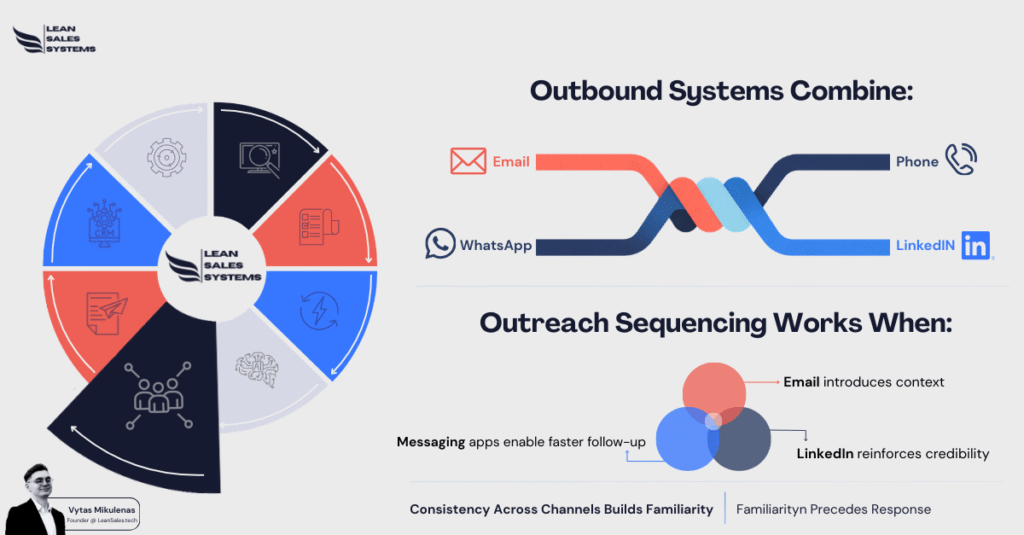
Modern buyers do not operate in one inbox.
Outbound systems typically combine:
email
LinkedIn
WhatsApp
phone
Outreach sequencing works when:
email introduces context
LinkedIn reinforces credibility
messaging apps enable faster follow-up
Consistency across channels builds familiarity.
And familiarity often precedes response.
Email Deliverability Infrastructure
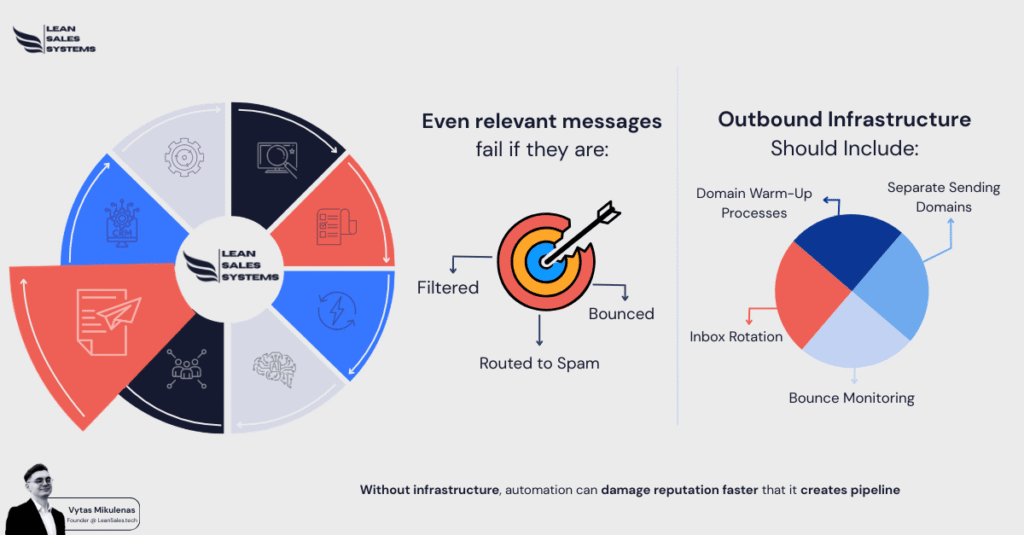
Why is deliverability critical for AI outbound?
Even relevant messages fail if they are:
bounced
filtered
routed to spam
Outbound infrastructure should include:
separate sending domains
domain warm-up processes
inbox rotation
bounce monitoring
This protects the primary company domain while allowing outreach at scale.
Without infrastructure, automation can damage reputation faster than it creates pipeline.
CRM & Performance Visibility
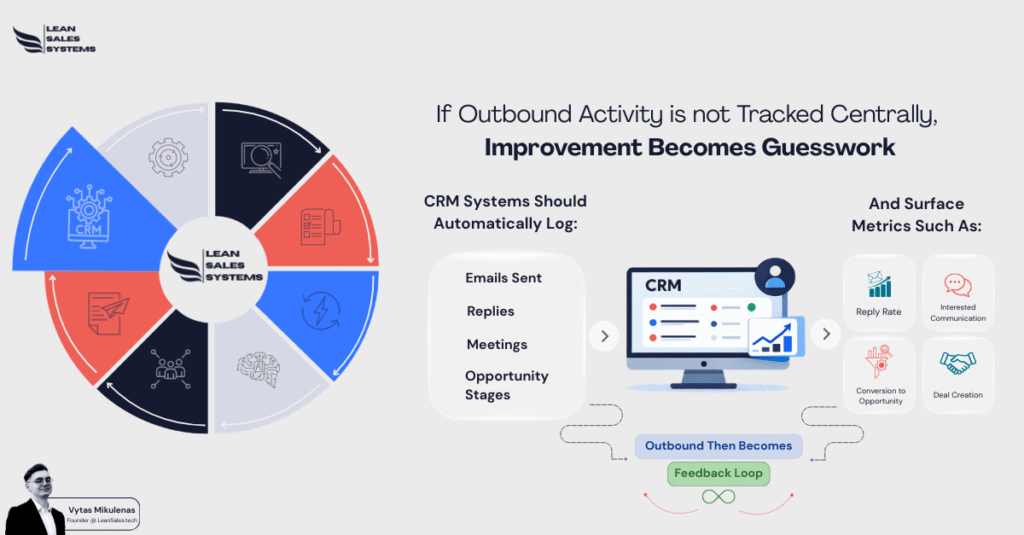
If outbound activity is not tracked centrally, improvement becomes guesswork.
CRM systems should automatically log:
emails sent
replies
meetings
opportunity stages
And surface metrics such as:
reply rate
interested conversations
conversion to opportunity
deal creation
Outbound then becomes a feedback loop.
Strategy adapts based on:
industry response
messaging performance
segment-level engagement
Sales Velocity Acceleration
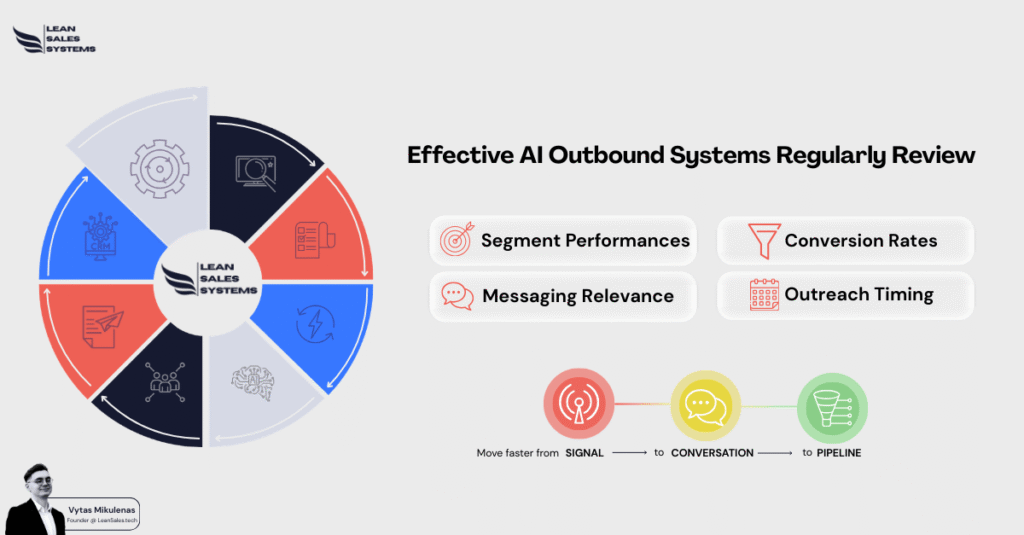
Effective AI outbound systems regularly review:
segment performance
messaging relevance
outreach timing
conversion rates
The objective is simple:
Move faster from signal -> to conversation -> to pipeline.
What We See in Real Client Projects
Across B2B companies we work with:
reply rates often improve after verified data is introduced
bounce rates decline once infrastructure is separated
CRM adoption increases when logging is automated
SDR time spent on manual research decreases
In manufacturing exporters especially, aligning outreach with expansion signals—rather than company size alone—often improves early-stage engagement.
AI does not replace strategy.
It reinforces structured thinking.
Common Mistakes
AI outbound fails when teams assume:
personalization alone creates interest
larger lists improve pipeline
tools replace targeting logic
automation improves timing
In practice:
AI scales existing decisions.
It does not make them automatically better.
When This Does Not Work
AI-driven outbound may be less effective when:
Total Addressable Market is extremely limited
deals depend on in-person trust-building
product-market fit is still evolving
Manual prospecting or strategic partnerships may be more suitable in these cases.
If you are experimenting with AI inside your outbound workflows and noticing that automation alone does not improve conversations or pipeline quality,
this is exactly the type of system-level problem we work on daily at leansales.tech.
