Why Most B2B Companies in Lithuania Struggle to Build a Predictable B2B Sales Pipeline
If you run a B2B company in Lithuania, this may sound familiar.
One month sales look strong.
The next month the pipeline feels empty.
Forecasts change weekly. Revenue feels reactive instead of planned.
This pattern usually means one thing: the company does not have a predictable B2B sales pipeline.
In the early days, growth often comes from referrals or the founder’s network. That approach works for a while. But it becomes fragile once the company starts scaling.
In this article, we’ll look at why building a predictable B2B sales pipeline is difficult for many Baltic companies. More importantly, we’ll explain what actually works in practice.
What Is a Predictable B2B Sales Pipeline (And Why It Matters)
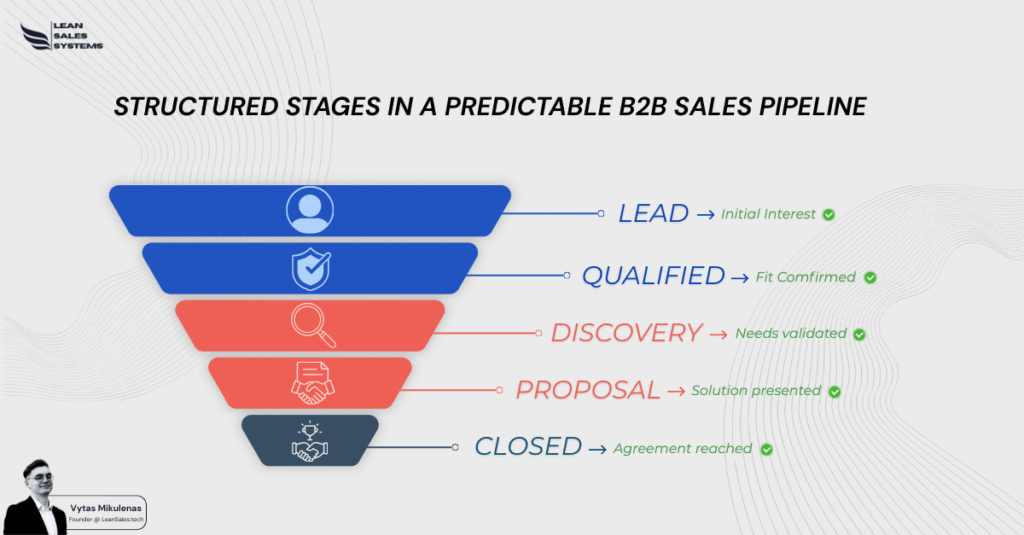
A predictable B2B sales pipeline means you can estimate future revenue with reasonable confidence.
You understand how many leads enter the pipeline each month. You know how many opportunities move forward. And you can estimate how many deals will close.
This predictability matters more than short-term revenue spikes.
One strong month feels great. But it does not help you plan hiring, marketing spend, or investments.
Research from Gartner shows fewer than half of B2B leaders fully trust their sales forecasts. That lack of confidence slows down growth decisions.
In smaller markets like Lithuania, the impact is even bigger.
There are fewer buyers, longer deal cycles, and higher pressure to use resources wisely. Without a predictable B2B sales pipeline, growth becomes stressful and difficult to manage.
Why Most B2B Sales Pipelines Become Unpredictable
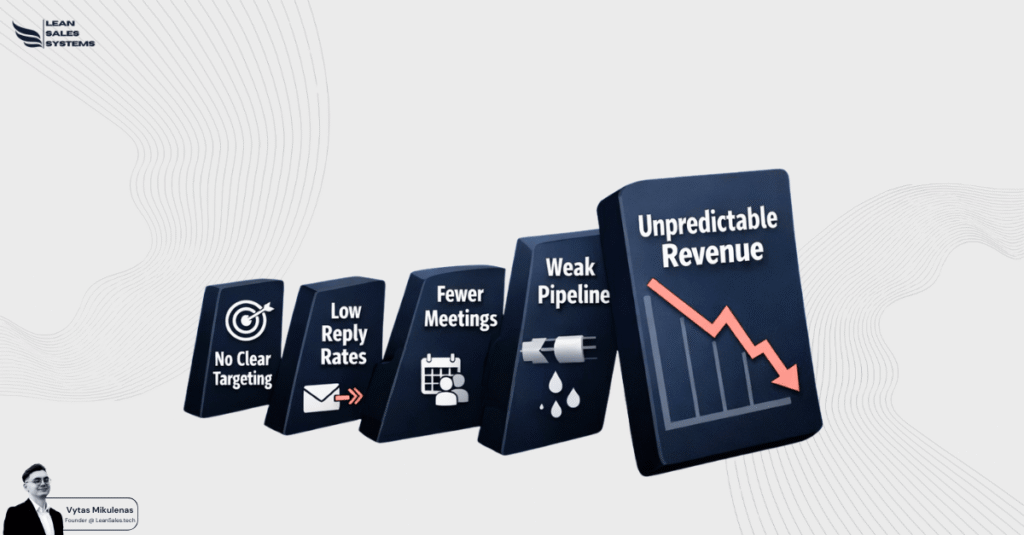
Most pipeline problems are not caused by lack of effort.
Sales teams work hard. Meetings happen. Proposals go out.
The real issue is usually structural.
Small gaps in strategy slowly create big problems in the pipeline.
Overreliance on Referrals and Founder-Led Sales
Many Lithuanian B2B companies start with referrals. It is natural. Trust spreads quickly in small markets.
But referrals arrive randomly.
They cannot create a predictable B2B sales pipeline.
Another common pattern is founder-led sales. The founder closes most deals because they know the product best.
At first this feels efficient. Over time it creates a bottleneck.
When the founder is busy, the pipeline slows down.
Research from Mckinsey shows founder dependency is one of the most common reasons B2B companies struggle to scale after early success.
A pipeline cannot be predictable if opportunities only appear occasionally.
This is exactly where most companies start noticing deeper issues.
What looks like a pipeline problem is often something else entirely.
It is structural limitation of founder-led sales.
I break this down in detail here:

No Clear B2B Sales Process
Another common issue is the absence of a documented sales process.
Without one, every deal moves differently.
Salespeople rely on instinct instead of structure. CRM stages exist, but they often do not match real buyer behavior.
This creates stuck deals, missed follow-ups, and unclear forecasts.
HubSpot research shows companies with a defined sales process are 33% more likely to be top performers.
Yet many Baltic B2B firms still rely on informal knowledge inside the team.
A predictable B2B sales pipeline requires clear stages and clear exit criteria. Each step should reflect real buyer commitment.
Sales and Marketing Misalignment
Marketing and sales often see the pipeline differently.
Marketing celebrates lead volume. Sales complains about lead quality.
Both sides feel frustrated.
In many cases the real problem is unclear targeting.
If marketing attracts companies that sales would never close, conversion rates drop quickly.
LinkedIn B2B benchmark data shows poor alignment between marketing and sales can reduce revenue growth by up to 10% each year.
When that happens, pipeline numbers look healthy in dashboards but weak in reality.
The Baltic Market Challenges Few People Talk About
Some obstacles are specific to Lithuania and the Baltic region.
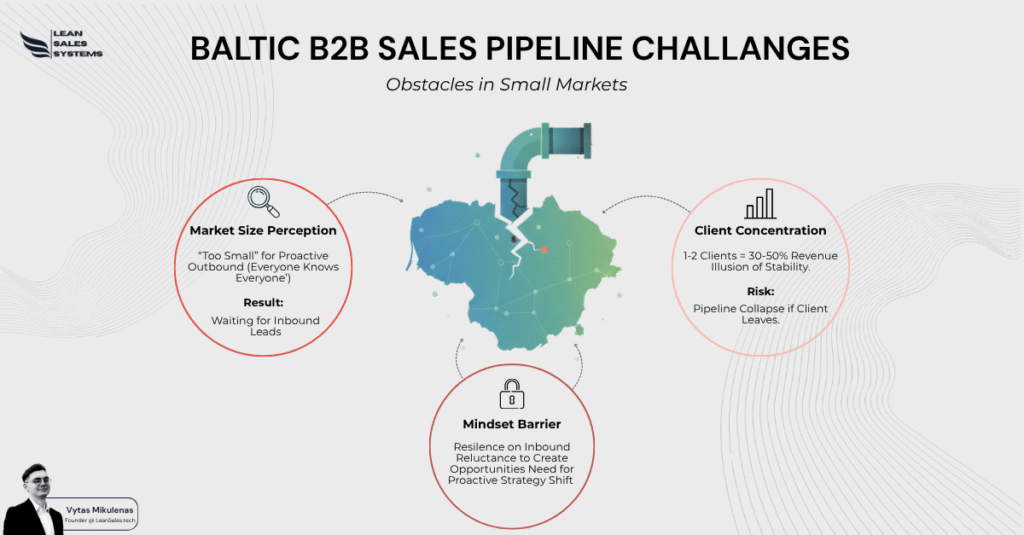
Many companies believe the market is “too small” for proactive outbound sales. There is often fear of damaging reputation because “everyone knows everyone.”
As a result, many firms wait for inbound leads instead of creating opportunities themselves.
The second challenge is client concentration.
It is common for one or two clients to generate a large share of revenue. Sometimes 30–50 percent.
This creates the illusion of stability.
But when one client leaves, the pipeline suddenly collapses.
Building a predictable B2B sales pipeline in the Baltics often requires changing these mindsets first.
What Actually Creates a Predictable B2B Sales Pipeline
Predictability rarely comes from a single tactic.
It appears when a few core foundations work together.
Companies that succeed usually focus on three things: targeting, process, and lead generation consistency.
Clear Ideal Customer Profile and Qualification
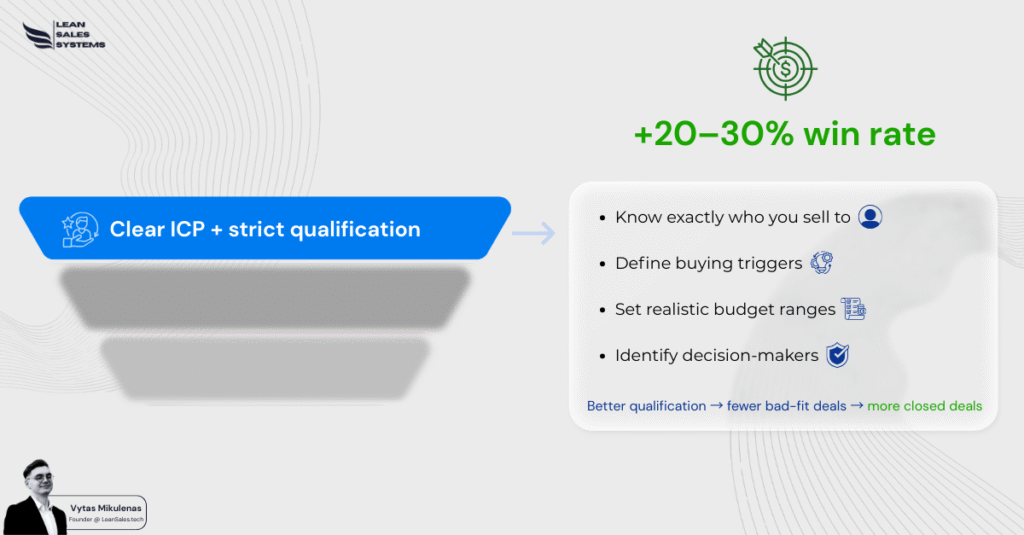
Everything starts with knowing exactly who you sell to.
A strong Ideal Customer Profile goes beyond industry or company size. It includes buying triggers, typical budget range, and decision-maker roles.
Clear qualification rules protect the pipeline.
Fewer bad-fit deals enter the process. Sales teams spend more time on opportunities that can actually close.
Many B2B companies see 20–30% higher win rates after tightening their qualification criteria.
A Documented and Repeatable Sales Process
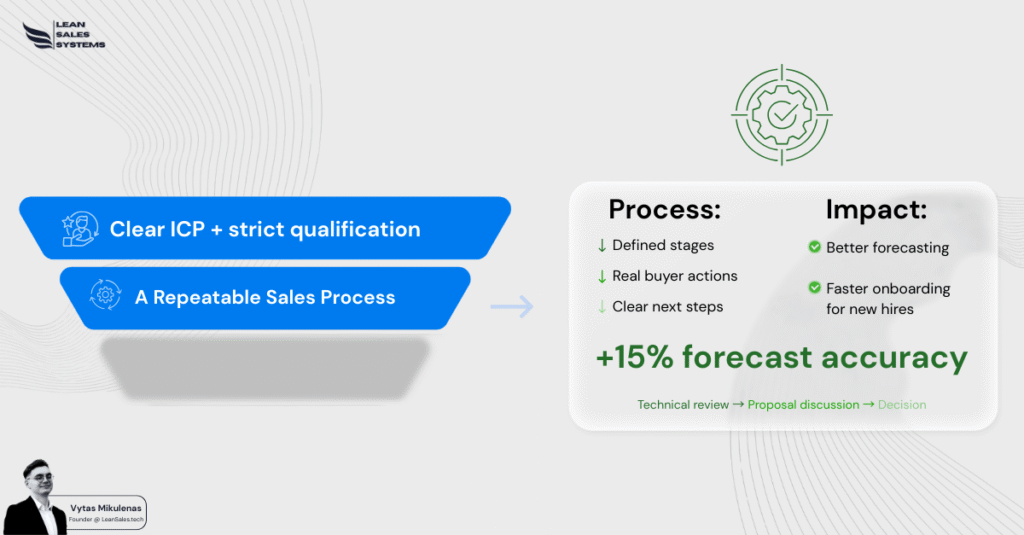
A sales process should reflect how buyers make decisions.
Each stage must represent a real step forward. For example, scheduling a technical review or agreeing to proposal discussions.
This clarity improves forecasting.
New sales hires also ramp faster because they follow a system instead of guessing the next step.
Research from CSO Insights shows structured sales processes can improve forecast accuracy by more than 15%.
That structure is essential for a predictable B2B sales pipeline.
A Consistent Lead Generation Engine
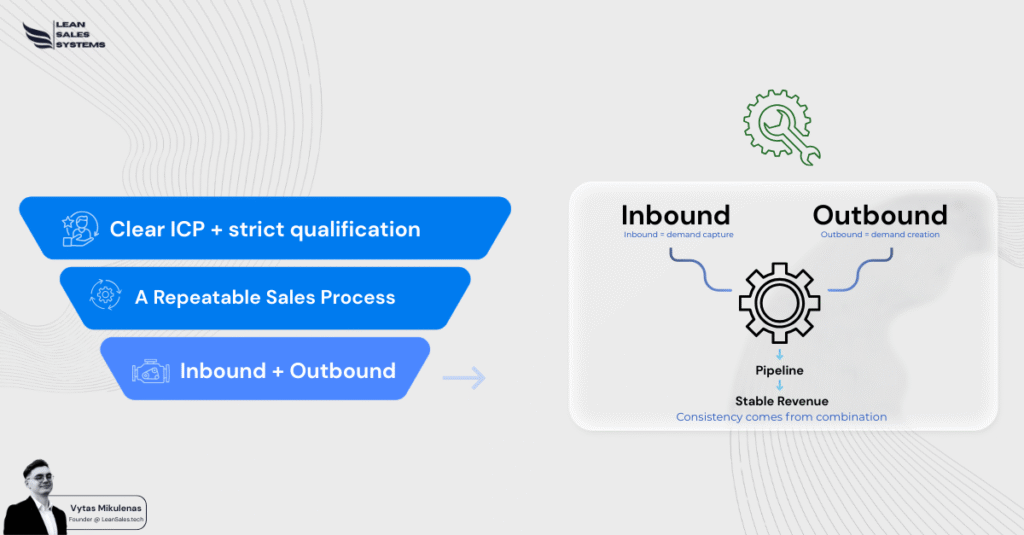
Predictability requires steady opportunity flow.
This usually means combining inbound marketing with proactive outbound sales.
In small markets like Lithuania, relying only on inbound leads creates gaps quickly.
Outbound outreach helps stabilize the pipeline.
When both channels work together, revenue fluctuations become smaller and easier to manage.
How Automation and AI Support a Predictable Pipeline
Automation and AI do not replace human sales.
They remove friction in the process.
Automation ensures every lead receives follow-up. It also keeps CRM data accurate.
AI helps teams prioritize accounts, identify buying signals, and forecast pipeline health.
McKinsey research shows AI-supported sales teams can improve productivity by around 20%.
For smaller Baltic teams with limited headcount, this leverage matters.
When implemented thoughtfully, automation strengthens a predictable B2B sales pipeline without harming trust.
 Read more on Vytas Mikulenas Linkedin
How Long It Takes to Build a Predictable B2B Sales Pipeline
Predictability does not appear overnight.
Most companies see early progress within 30 to 60 days. Meetings become more consistent and pipeline data improves.
After about 90 days, pipeline stability usually becomes visible.
Revenue predictability follows once enough deals move through the new system.
The biggest delays happen when companies chase tools instead of building systems.
A predictable B2B sales pipeline rewards patience and discipline.
Key Takeaways: Turning an Unpredictable Pipeline Into a Scalable Growth System
A predictable B2B sales pipeline is not about working harder.
It is about building a system that produces consistent results.
In Lithuania and the Baltic region, this means overcoming small-market fear, defining your process, and using automation wisely.
Companies that do this gain confidence, control, and sustainable growth.
If your pipeline still feels random, it is often a sign the system is missing, not the effort.
Ready to Build a Predictable B2B Sales Pipeline?
If you want to move from reactive sales to predictable growth, we help B2B companies design and implement complete sales systems.
This includes strategy, outbound, automation, and AI — all adapted to the Baltic market.
